The White Desert of Egypt is a night in a chalk landscape that looks like another planet
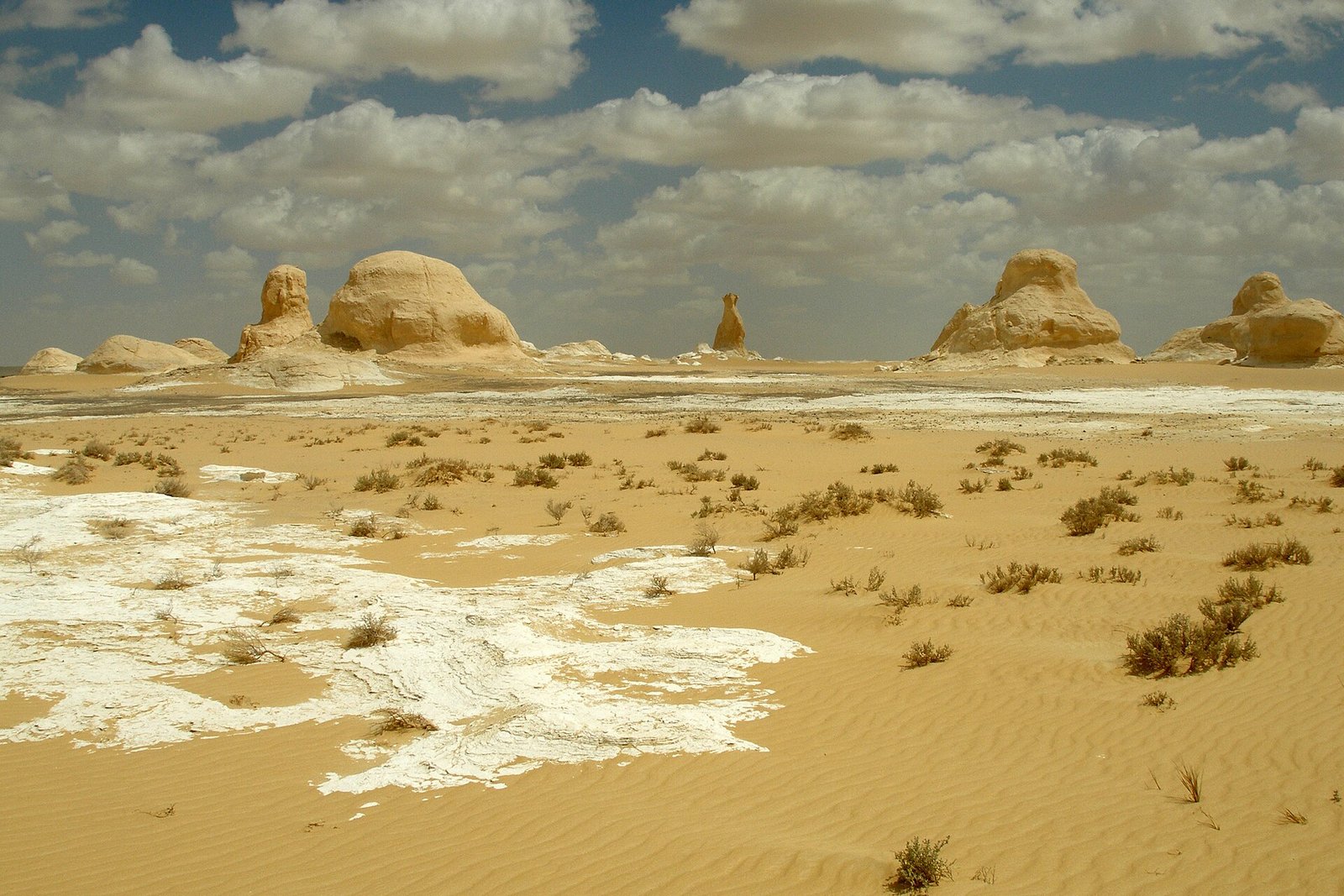
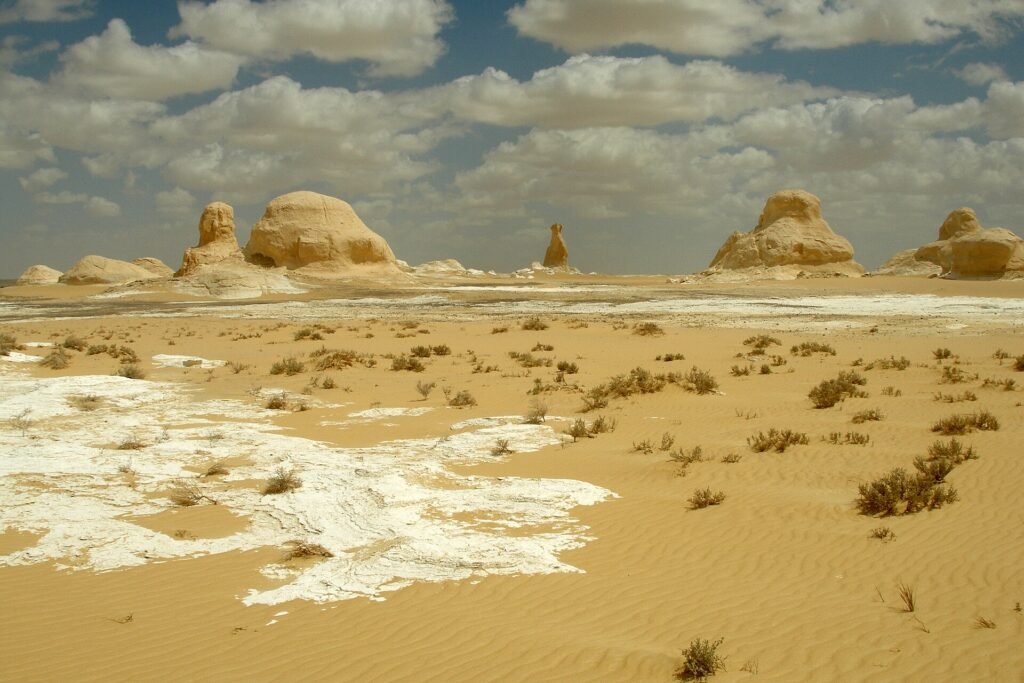
The White Desert of Egypt is a night in a chalk landscape that looks like another planet
The White Desert is a national park in Egypt's Western Desert, between the oases of Bahariya and Farafra, where the ground is chalk and the wind has carved it into thousands of white shapes that people name after mushrooms, chickens and sphinxes. You reach it from Cairo by road, four to five hours to Bahariya oasis and about two more into the park by 4x4, and you sleep there in a Bedouin camp between the formations, with dinner cooked on the fire, a sky full of stars and a fennec fox sniffing around the tea. The classic trip is two days and one night from Cairo, October through April. Here is how it works and how to do it well.
What the White Desert actually is
Egyptians call it Sahara el Beyda, the white desert, and the name is literal. The floor of this part of the Western Desert is chalk, cream to bright white, under a very dark blue sky and beside dunes of ordinary golden sand. The contrast hits you from the car, well before the first formation.
The formations cluster in zones. The Old White Desert lies near the road and has the largest blocks; the New White Desert, deeper in and reached only by 4x4, is where the famous thin mushrooms stand in open fields and where the camps go.
It is not a place for temples. It is the one stop on an Egypt trip where the country stops being about the pharaohs and becomes about silence, geology and a night outdoors, which is why it belongs on a longer plan such as Egypt in 3 weeks.
How the chalk formations formed, and why they look like mushrooms
The chalk is the bed of a sea. Tens of millions of years ago this region lay under warm shallow water, and the shells of tiny marine organisms settled on the bottom in layers. When the sea retreated, that compacted sediment was left as a plateau of soft white rock. The proof lies on the ground: sea urchins and shells embedded in the surface at the fossil field.
Since then the wind has done the sculpting, stripping the soft bands of chalk and leaving the hard. The mushroom shape comes from one detail: the sand in the air is densest close to the ground. The base of every pillar is hit hardest and wears fastest, leaving a broad cap on a narrow neck. Eventually the neck fails, the cap falls, and a new pillar begins elsewhere. The chicken, the rabbit and the sphinx your guide points out are stages of the same process, which is also why the park forbids climbing on them: a foot on a chalk neck removes what the wind took years to shape.
The road from Cairo, Bahariya oasis and the stops on the way
You leave Cairo around 7 in the morning on the desert road southwest. Count four to five hours to Bahariya, with one stop at a roadside cafe for tea and a bathroom you will be glad of.
Bahariya is a real oasis, date palms, hot springs and villages in a ring of black hills, and it is the base for the whole trip. You switch here from the car to the 4x4, eat lunch, and on day two come back for a wash before the drive to Cairo.
From Bahariya the 4x4 heads south toward Farafra and stops several times before turning into the park. Ask for every stop, because a driver in a hurry will skip them:
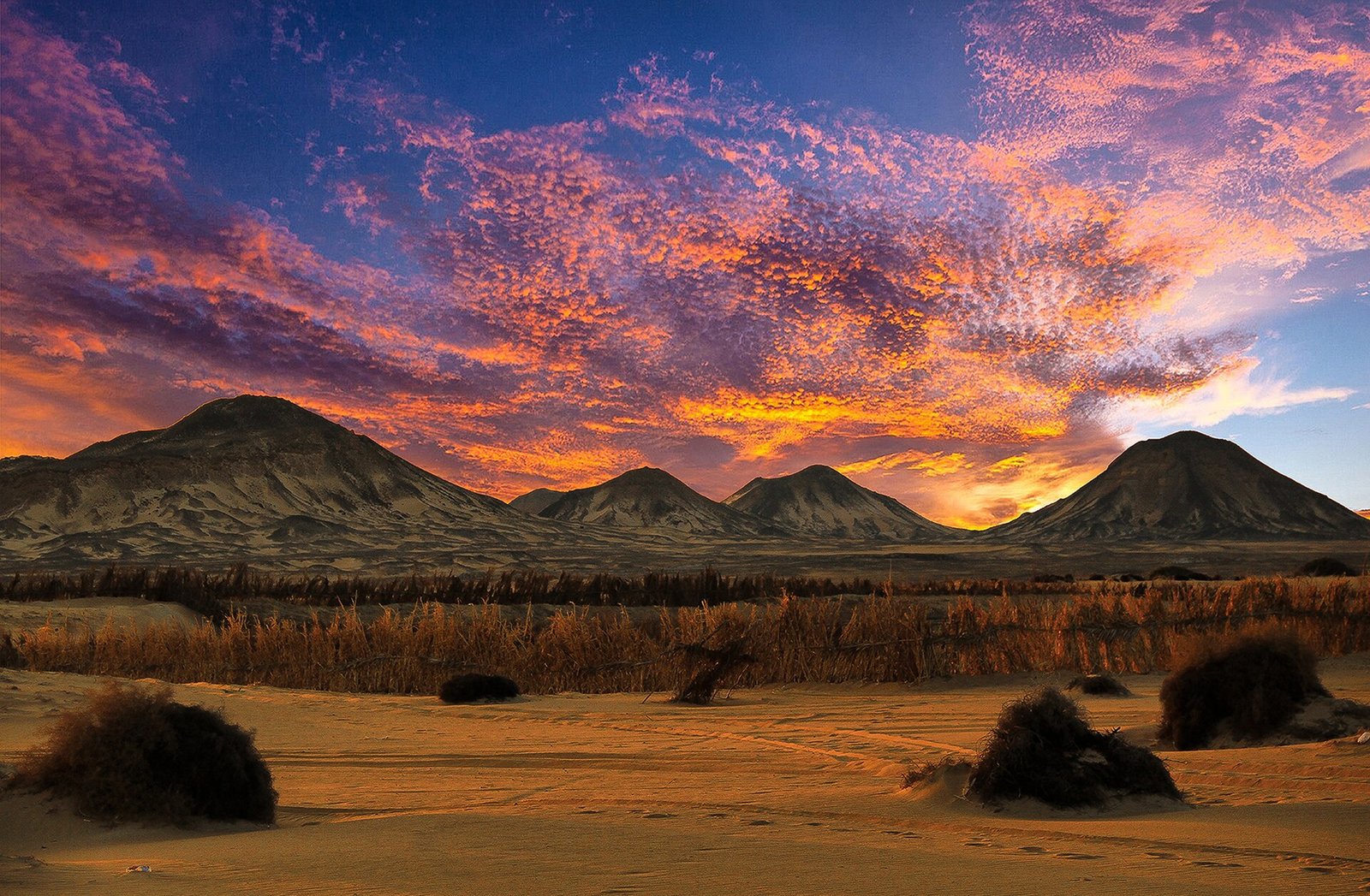
- The Black Desert. Cone-shaped hills topped with dark basalt from old volcanic activity. Climb one for the view over dozens of others.
- Crystal Mountain. A low outcrop of quartz and calcite beside the road with a natural arch in it. In the sun the ridge sparkles. Taking a crystal is prohibited and the checkpoints do look.
- The valley of Agabat. White cliffs, sandstone pinnacles and golden dunes. The driver takes the vehicle down a steep dune into it, often the most dramatic moment of the day.
- The fossil field, where the ground turns white and the shells appear underfoot.
Bahariya to the camp takes about two hours with the stops, and you want to be inside the park with an hour of daylight left.
The 4x4, the Bedouin camp and the night
The camp is simple, and that is the point. The driver, almost always from a Bedouin family in Bahariya, picks a spot among the formations, parks the vehicle to block the wind and unrolls a canvas windbreak in a U shape. Rugs go on the sand, then mattresses, blankets and sleeping bags. There is no tent unless you ask, and most people do not, because the reason to be there is the sky.
While you walk to the nearest mushrooms for the last light, he lights a fire and cooks. Dinner is chicken or lamb with rice and vegetables in a pot on the coals, a salad, flatbread and sweet tea from a blackened kettle. It tastes far better than it sounds, partly because you are hungry and partly because your back is against a rock far older than the pyramids.
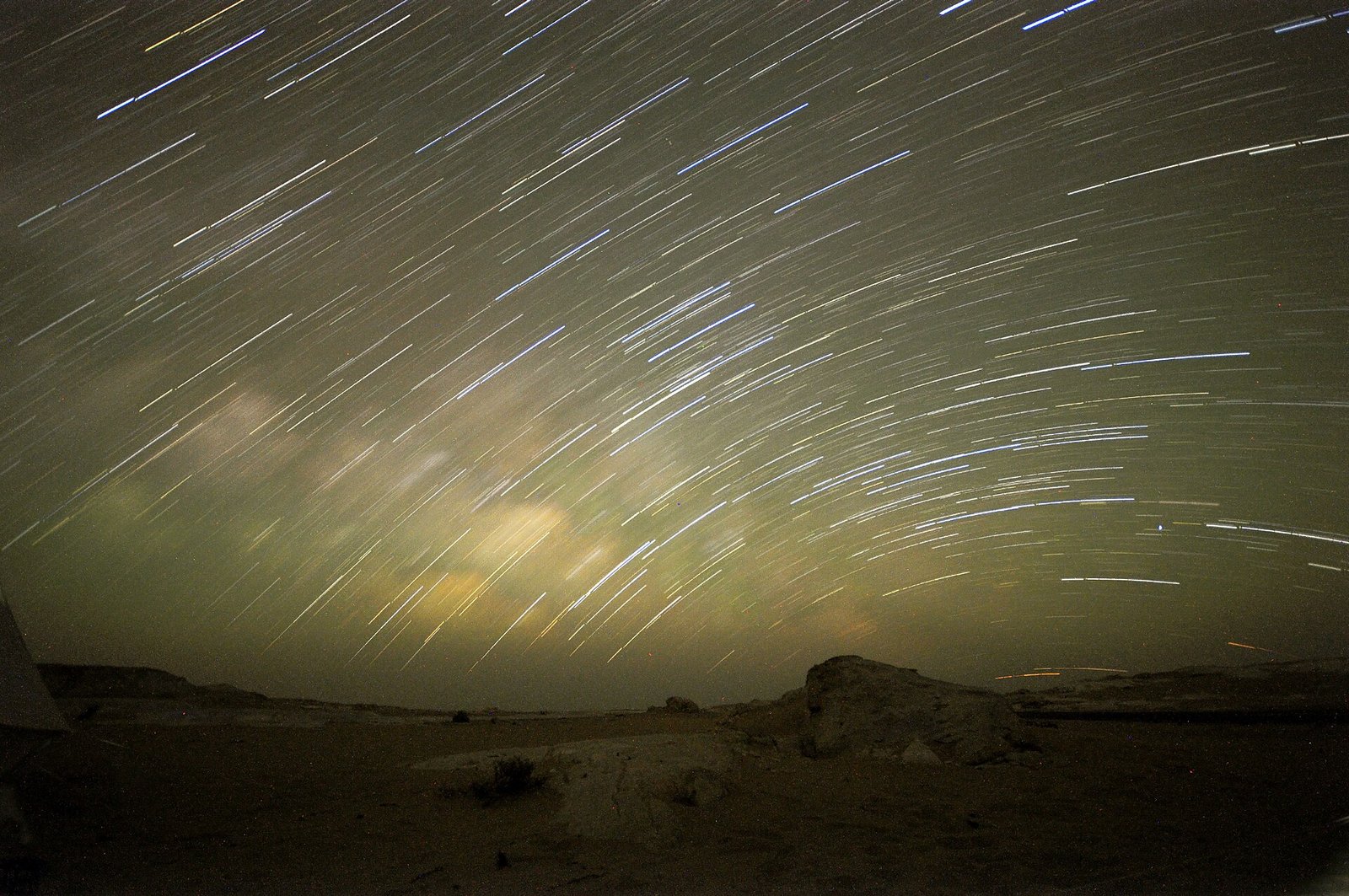
Then the show starts. On a moonless night the Milky Way is a bright band and shooting stars come every few minutes. With a big moon you get the other famous effect: the chalk reflects so much light that the desert looks like fresh snow and you can walk without a headlamp. Check the lunar calendar when you choose dates, because the two nights are completely different.
The fennec foxes come with the food. Small, pale, with enormous ears, they are used to camps. You hear a soft padding just outside the firelight, then a pair of eyes. They take what is dropped and leave. Keep your shoes inside the windbreak. In the middle of the night you wake, look up, and the sky has rotated. That is the moment people describe years later, and why this sits high on our list of unique experiences in Egypt.
Sunrise among the mushrooms
Set an alarm for twenty minutes before first light. Walk away from the camp until the vehicle is a dot, sit on the sand and wait.
The white takes color slowly: a grey that separates the formations from the sky, a pink on the caps while the necks stay in shadow, a wash of orange as the sun clears the horizon, then the flat white of full day. The long shadows that give the mushrooms their volume last perhaps half an hour. This is when the photographs that made the place famous are taken, so have the camera ready and keep the phone in your sleeping bag overnight, because cold drains a battery fast.
Breakfast is bread, cheese, eggs and tea. Then the camp is packed, the fire pit is buried, and you drive out to Bahariya for lunch, a hot spring if you want one, and the road to Cairo by sunset.
One night or two in the desert
The standard trip is two days and one night from Cairo. A second night changes the rhythm rather than adding new sights.
| Plan | What you get | Best for |
|---|---|---|
| 2 days, 1 night | Black Desert, Crystal Mountain, Agabat, sunset, camp night, sunrise, Bahariya lunch and hot spring. | Most first visits, anyone fitting the desert into a Nile-based itinerary. |
| 3 days, 2 nights in the park | A full day inside the White Desert with no driving. Time for the far formations, a long walk, a second sunset and sunrise. | Photographers, stargazers, anyone who found the standard trip rushed. |
| 3 days, 2 nights, one in Bahariya | The park night plus a night in a small oasis lodge with a bed and shower. | Families with younger children, seniors, anyone who wants a bed after the desert. |
For a first trip, take the single night. It fits neatly before or after Cairo in a plan like our 15-day Egypt itinerary, and it leaves you wanting to return. Take two nights when the desert is the reason for the trip rather than a detour from it.
Seasons, temperatures and the cold nights
The season is October through April. Summer is not dangerous with a good driver, but daytime heat in the open desert climbs past 104 F (40 C), the only shade is the car, and the walk between the formations becomes a chore.
| Months | Daytime | Night at the camp | Notes |
|---|---|---|---|
| October and November | 77 to 90 F (25 to 32 C) | 50 to 59 F (10 to 15 C) | Warm days, comfortable nights, clear skies. The easiest time. |
| December to February | 64 to 72 F (18 to 22 C) | 34 to 43 F (1 to 6 C), sometimes near freezing | Best light and sharpest stars. Real winter clothing for the night. |
| March and April | 75 to 90 F (24 to 32 C) | 52 to 61 F (11 to 16 C) | Pleasant, but spring brings windy days with sand in the air. |
| May to September | 95 to 110 F (35 to 43 C) | 68 to 79 F (20 to 26 C) | Possible with an early start, not recommended for a first visit. |
The mistake everyone makes is packing for a desert as if it were only hot. The swing between afternoon and 3 in the morning can be 40 F (22 C). For the year as a whole see the best time to visit Egypt; the desert and the Nile agree on the same months.
What to bring for the night
The operator supplies the camp: windbreak, mattresses, blankets, sleeping bags, food, water and the fire. What you carry makes the difference.
- Warm layers you would wear in a real winter. Fleece, a windproof jacket, a wool hat, gloves in winter, thick socks to sleep in.
- A headlamp rather than a hand flashlight, so both hands are free at the camp.
- A power bank. There is no electricity, and cold kills phone batteries.
- Wet wipes, hand sanitizer and toilet paper. There is no running water and no bathroom.
- A scarf or buff and real sunglasses. Wind with sand in it is the one thing that spoils an afternoon.
- Sunscreen, a hat and closed shoes. Chalk is sharp underfoot and sandals fill with sand.
- A small bag for your trash and your passport for the checkpoints.
Leave the big suitcase at your Cairo hotel. The full list is in what to pack for Egypt; the desert night is the only part of the trip that needs the warm half of it.
Who the White Desert suits, and who should skip it
It suits couples, friends, solo travelers and families with children old enough to enjoy a night without a bathroom, which in our experience means about eight and up. Photographers get more out of it than anywhere else in Egypt, and people who are tired of temples by the second week find it a reset.
It does not suit everyone. Anyone with mobility limits will struggle with the dune descents and with sleeping on the ground, though the Bahariya lodge version removes the second problem. Anyone who cannot go a night without a proper toilet should choose the lodge night and see the park by day. Travelers with back problems should tell us in advance so we add a thicker mattress and a folding chair.
Safety, checkpoints and the national park rules
The Bahariya road and the White Desert are the standard desert route in Egypt, driven by tourist vehicles every day of the season. You go with a licensed driver in a registered vehicle, and there are police checkpoints at the edge of Cairo, at the entrance to Bahariya and on the road into the park. They check the vehicle's papers and the passenger list, sometimes passports, and wave you on.
Going independently is not sensible. The tracks inside the park are not signed, sand traps the unwary, phone coverage vanishes past Bahariya, and the permits are arranged through the operator, not at a gate.
The park rules exist because the chalk is fragile and the visitors are many:
- Do not climb on, carve into or lean against the formations.
- Take no rocks, crystals or fossils. Rangers and checkpoints inspect vehicles.
- Camp only where the rangers allow, and keep the fire small.
- Carry every piece of trash out. Bury nothing but the fire ash.
- Stay on the established tracks; new tire marks in the chalk last for years.
Practical safety is mostly sun and cold. Drink more water than you think you need, and put every layer on before the sun sets. Tell us about any medical condition when you book so the driver knows.
How Explora Egipto runs the White Desert trip
We run it privately, never as a shared minibus. A driver from our team collects you at your Cairo hotel early on day one in an air-conditioned car and takes you to Bahariya. There you meet the 4x4 and its driver, a Bedouin from the oasis who works with us season after season, and the two of you set the pace. Lunch, then the Black Desert, Crystal Mountain, Agabat and the park, with the camp set before sunset. On day two you leave late in the morning, wash and eat in Bahariya, and the same car returns you to Cairo by evening.
The desert night slots into a longer trip at the start, right after the pyramids, or at the end, as the last big thing before you go home. We build it into the same quote as the rest, whether that is a short plan from our Cairo excursions or a full tour from the Egypt tour packages. There is no price on this page by design; tell us your dates and the number of travelers and we send you the quote.
Frequently asked questions
Where is the White Desert and how far is it from Cairo?
It is in the Western Desert, on the road between the oases of Bahariya and Farafra, southwest of Cairo. The paved road from Cairo to Bahariya takes four to five hours, and from Bahariya the 4x4 needs about two more hours with stops to reach the camping area. Almost every trip goes through Bahariya, where you switch vehicles and eat.
Can you visit the White Desert in one day from Cairo?
Physically yes, and it is a mistake. A day trip means around ten hours of driving to see the formations at midday, when the light is flat and the white glares. The reason to go is sunset, the night sky and sunrise, none of which fit into a day. Take the two-day version, or the Bahariya lodge version if sleeping outside is not for you.
How cold does it get at night in the White Desert?
Colder than most people expect. From December to February the camp can drop to 34 to 43 F (1 to 6 C) by the early hours, occasionally close to freezing. In fall and spring nights sit around 50 to 60 F (10 to 16 C). Sleeping bags and blankets are provided, but bring a hat, fleece and thick socks and put them on before dark.
Is the White Desert safe for tourists?
Yes, on the standard Bahariya route with a licensed local driver. It is the main desert excursion in Egypt, driven by tourist vehicles every day in season, with police checkpoints on the road and rangers in the park. The real risks are sun by day and cold at night, both handled by water, layers and an experienced driver. Do not attempt it in a rental car alone.
Are there bathrooms or showers at the camp?
No. The camp is a windbreak, mattresses, blankets and a fire among the formations, with no running water and no toilet. You use the desert discreetly behind a rock, with wet wipes and a small shovel the driver carries. A shower is waiting in Bahariya the next morning. If that is a deal breaker, the oasis lodge version visits the park by day and sleeps in a bed.
Will I really see fennec foxes and the Milky Way?
The foxes come to most camps in the season, drawn by the smell of dinner, though they are wild and no one can promise them. The stars are close to certain: there is no artificial light for a very long distance and the winter air is dry, so on a moonless night the Milky Way is plainly visible. On a bright moon you trade the stars for the snow effect on the chalk.
Sleep among the chalk mushrooms on your Egypt trip
Tell us your dates, how many of you are traveling and whether you want one night or two, and we come back with the White Desert built into the rest of your Egypt plan: the car from Cairo, the 4x4 and its driver, the camp, the meals and the Bahariya hot spring on the way home. No prices here, just a quote in your inbox.